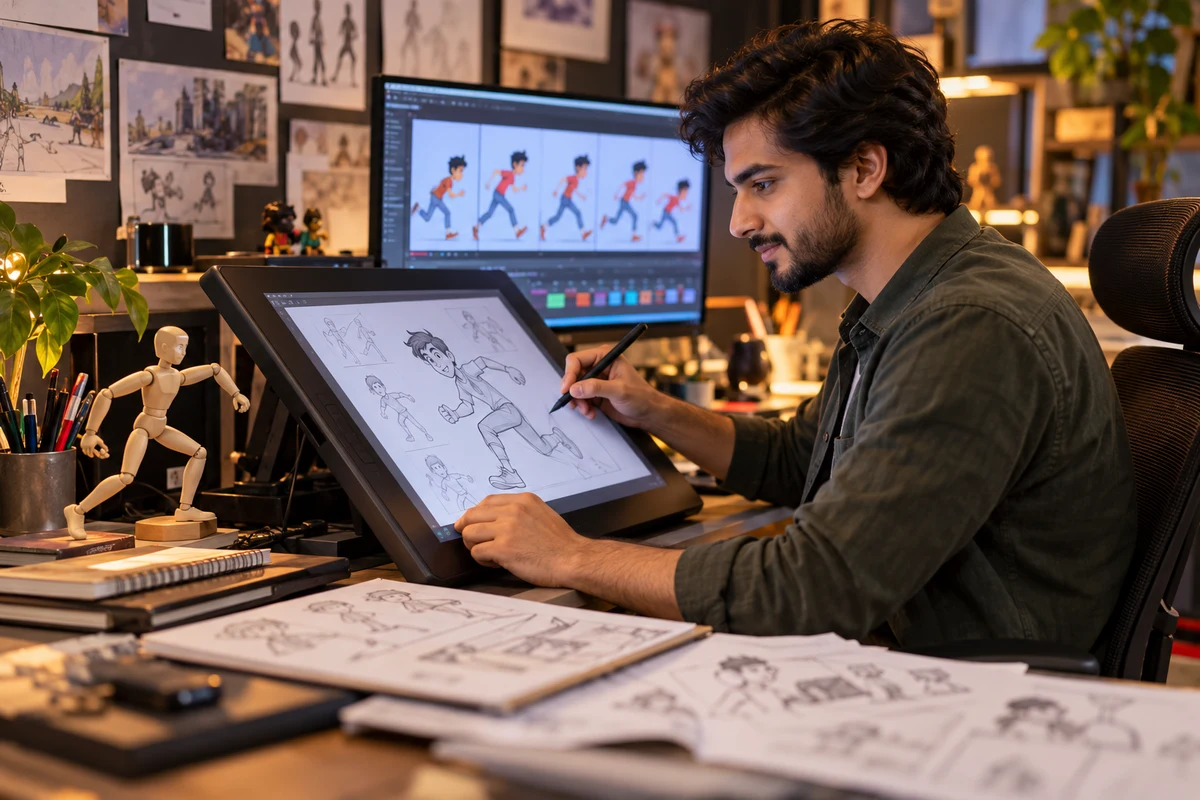
Animators create the illusion of movement for films, games, education, advertising and digital products. The work combines visual storytelling, timing, performance and technical production.
Key Outcomes
What this career leads to
Engaging stories
Clear visual explanation
Expressive characters
Dynamic digital experiences
What They Do
On the job
Plan movement through scripts, storyboards or animatics
Create 2D, 3D, stop-motion or motion-graphic animation
Refine timing, acting, composition and transitions
Collaborate with directors, designers, sound teams and developers
Where They Work
Typical workplaces
Animation studios
Game-development companies
Film and television production
Advertising agencies
Education and technology teams
Freelance production
Core Skills
What it takes
Drawing, movement and visual storytelling
Animation software and production workflow
Timing, observation and acting awareness
Feedback, teamwork and persistence
Areas of Application
Where this knowledge shows up
Film and television animation
Games and interactive media
Motion graphics
Educational and scientific animation
Advertising and social content
Education & Entry Path
The learning route
Animation, fine-arts, design or media programmes can provide a foundation, but a strong showreel demonstrating motion, storytelling and technical skill is especially important.
Career Scope
The long view
Animators may specialise in character animation, 3D, effects, motion graphics, rigging, storyboarding, lighting or animation direction.