
SCIENCE & RESEARCH
Chemist
Understanding Matter, Creating Useful Materials
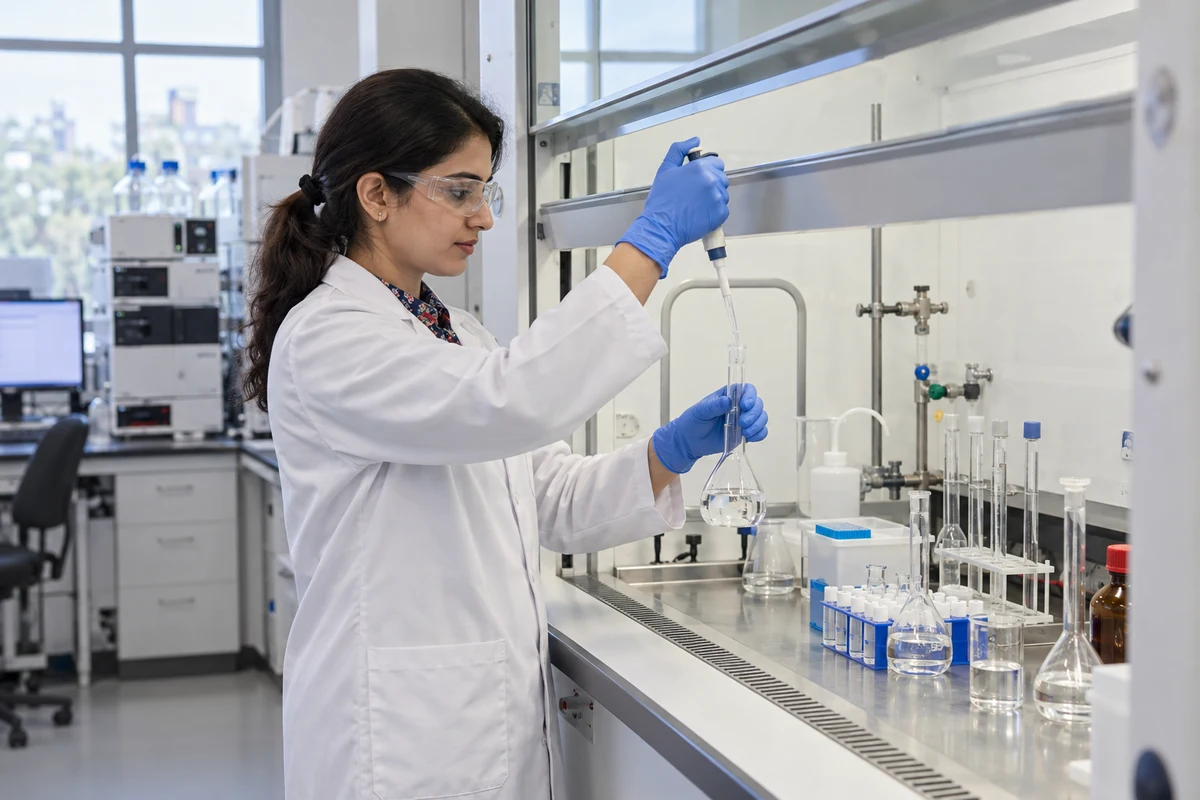
Chemists study the composition, structure and reactions of matter. They use laboratory evidence to develop substances, test quality and solve problems across health, industry, food and the environment.
Key Outcomes
What this career leads to
- Reliable chemical analysis
- Safer materials
- Improved products
- Controlled quality
What They Do
On the job
- Prepare substances and conduct chemical experiments
- Analyse samples using laboratory instruments
- Develop or improve formulations and processes
- Document methods, results and safety information
Where They Work
Typical workplaces
- Chemical and manufacturing industries
- Pharmaceutical companies
- Food and quality-control laboratories
- Environmental agencies
- Universities and research centres
- Forensic and regulatory laboratories
Core Skills
What it takes
- Chemical theory and laboratory practice
- Measurement and analytical reasoning
- Safety and risk control
- Technical reporting and problem-solving
Areas of Application
Where this knowledge shows up
- Analytical chemistry
- Organic and inorganic chemistry
- Physical chemistry
- Materials and polymer chemistry
- Environmental and industrial chemistry
Education & Entry Path
The learning route
A bachelor's degree in chemistry or a closely related discipline is a common entry point. Research, specialist instrumentation and academic roles may require postgraduate study.
Career Scope
The long view
Chemists work in analysis, formulation, manufacturing, quality assurance, environmental monitoring, materials science, research, regulation and teaching.
Related Careers
Kindred paths to explore
Explore Scientists’ Contribution
The discoveries behind this field
- Antoine Lavoisier 1743 - 1794 Chemistry Father of modern chemistry; law of conservation of mass Read their profile
- Marie Curie 1867 - 1934 Chemistry Pioneered research on radioactivity; first woman Nobel laureate Read their profile
- Dmitri Mendeleev 1834 - 1907 Chemistry Created the Periodic Table of Elements Read their profile
- Al-Razi c. 865 - 925 Medicine Pioneering physician and chemist; isolated alcohol Read their profile