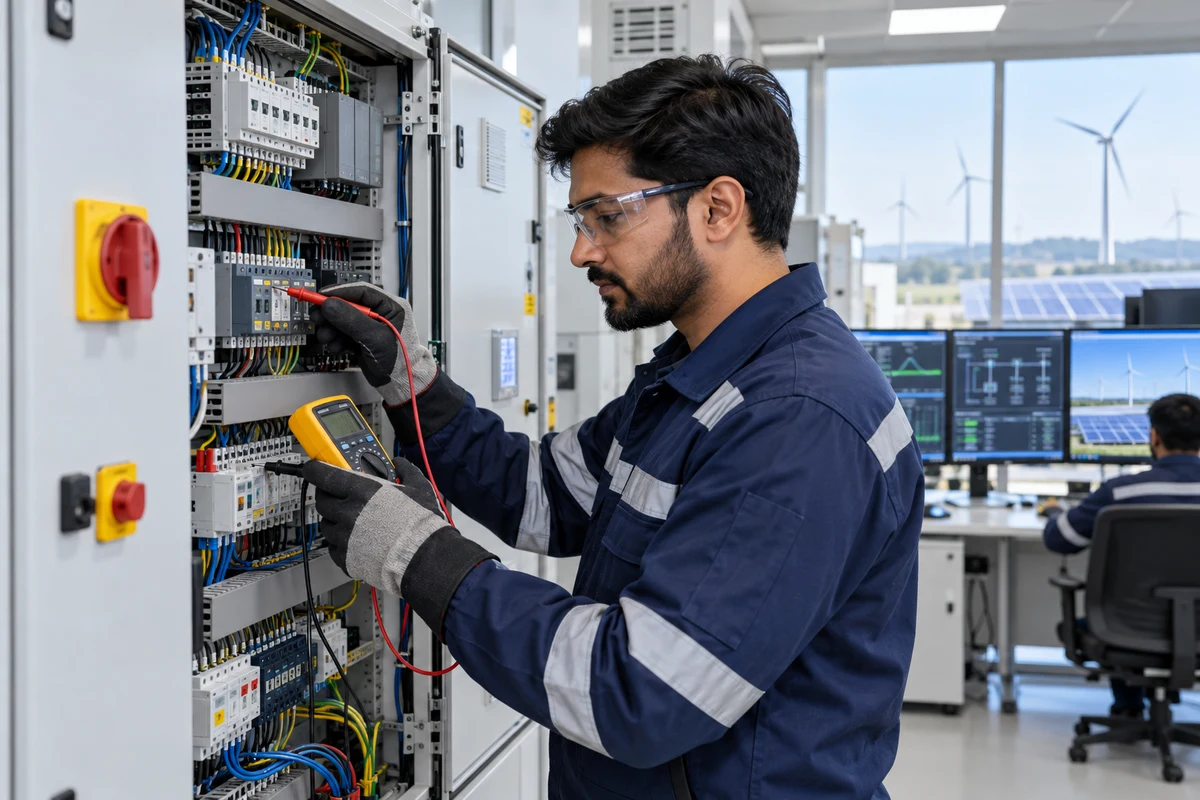
Electrical engineers design and manage systems that generate, control, transmit or use electricity and electronic signals. Their work supports power, communication, automation and devices.
Key Outcomes
What this career leads to
Reliable power
Connected systems
Efficient control
Safer electrical design
What They Do
On the job
Design circuits, power or control systems
Model and test electrical performance
Select components and prepare technical specifications
Commission, troubleshoot and improve systems
Where They Work
Typical workplaces
Power utilities
Engineering and construction firms
Electronics manufacturers
Telecommunications companies
Automation and industrial plants
Research and government organisations
Core Skills
What it takes
Circuit and systems analysis
Mathematics and simulation
Testing and instrumentation
Safety, documentation and teamwork
Areas of Application
Where this knowledge shows up
Power generation and distribution
Electronics and embedded systems
Control and automation
Telecommunications
Renewable-energy systems
Education & Entry Path
The learning route
A recognised degree in electrical or electronic engineering is typical. Regulated responsibilities may require supervised experience and professional registration.
Career Scope
The long view
Electrical engineers can specialise in power, electronics, control, communications, instrumentation, renewables, design, operations or project leadership.