
SCIENCE & RESEARCH
Environmental Scientist
Evidence for a Healthier Planet
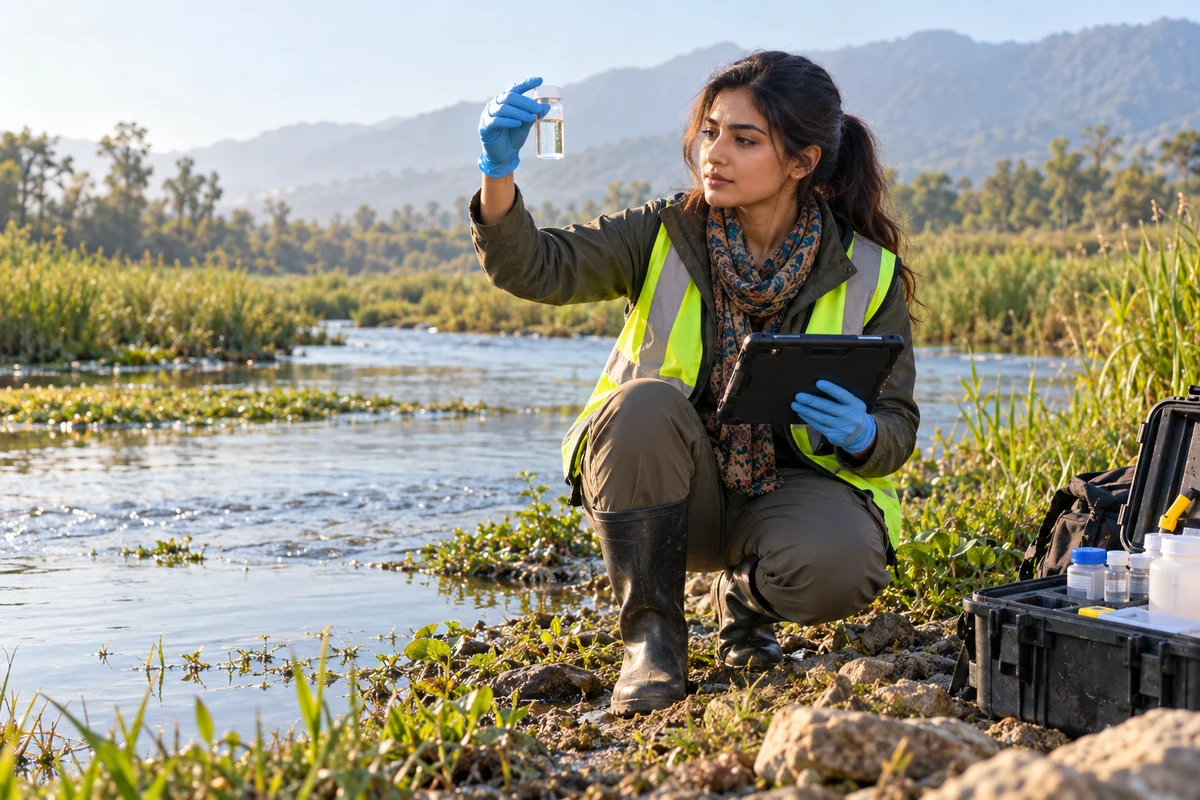
Environmental scientists study air, water, soil, ecosystems and human impacts on the environment. They collect evidence and help organisations understand and reduce environmental harm.
Key Outcomes
What this career leads to
- Cleaner environments
- Better risk assessment
- Informed policy
- Sustainable decisions
What They Do
On the job
- Collect environmental samples and field measurements
- Analyse pollution, ecosystem or resource data
- Assess environmental risks and compliance
- Prepare reports and recommend practical controls
Where They Work
Typical workplaces
- Environmental agencies
- Consulting firms
- Research institutes
- Industries and utilities
- Conservation organisations
- Universities and government departments
Core Skills
What it takes
- Field and laboratory methods
- Data analysis and mapping
- Systems thinking
- Technical writing and stakeholder communication
Areas of Application
Where this knowledge shows up
- Pollution monitoring
- Water and soil science
- Environmental impact assessment
- Conservation and ecology
- Climate and sustainability work
Education & Entry Path
The learning route
A degree in environmental science, ecology, chemistry, geology or a related discipline is common. Specialist roles may require training in GIS, impact assessment, regulation or postgraduate research.
Career Scope
The long view
Environmental scientists work in monitoring, consulting, regulation, conservation, water management, sustainability, research and policy support.
Related Careers
Kindred paths to explore
Explore Scientists’ Contribution
The discoveries behind this field
- Al-Biruni c. 973 - 1048 Astronomy Measured the Earth; wrote encyclopaedically across the sciences Read their profile
- Antoine Lavoisier 1743 - 1794 Chemistry Father of modern chemistry; law of conservation of mass Read their profile
- Charles Darwin 1809 - 1882 Biology Theory of Evolution by Natural Selection Read their profile
- Marie Curie 1867 - 1934 Chemistry Pioneered research on radioactivity; first woman Nobel laureate Read their profile