
SCIENCE & RESEARCH
Geneticist
Understanding How Traits and Diseases Are Inherited
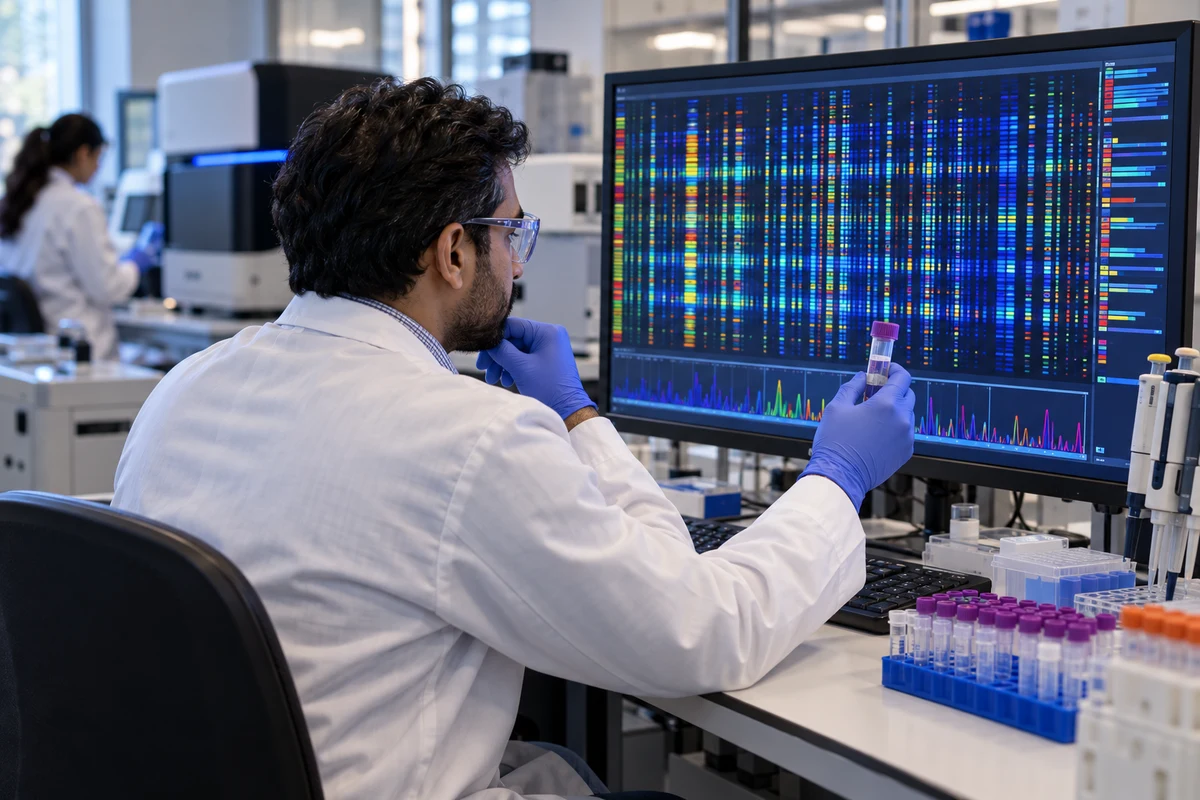
Geneticists study genes, heredity and biological variation. They investigate how genetic information influences organisms, health, development and populations.
Key Outcomes
What this career leads to
- Deeper disease insight
- Improved genetic analysis
- Better biological understanding
- Responsible research
What They Do
On the job
- Design studies involving genes and inheritance
- Analyse DNA, genomic or population data
- Interpret patterns and communicate scientific findings
- Contribute to research, diagnostics or counselling teams within professional scope
Where They Work
Typical workplaces
- Universities and research institutes
- Genomic and diagnostic laboratories
- Hospitals and specialist centres
- Biotechnology companies
- Agricultural research organisations
- Public-health and forensic laboratories
Core Skills
What it takes
- Genetics and molecular biology
- Quantitative and computational analysis
- Research design
- Ethical reasoning and clear communication
Areas of Application
Where this knowledge shows up
- Human and medical genetics
- Molecular genetics
- Population genetics
- Plant and animal genetics
- Genomics and bioinformatics
Education & Entry Path
The learning route
A degree in genetics, molecular biology, biotechnology or a related science is common. Independent research, clinical genetics and specialist laboratory roles usually require postgraduate and/or regulated professional training.
Career Scope
The long view
Geneticists may pursue research, genomic analysis, laboratory diagnostics, agriculture, biotechnology, forensics or education. Clinical counselling is a separate regulated profession in many countries.
Related Careers
Kindred paths to explore
Explore Scientists’ Contribution
The discoveries behind this field
- Gregor Mendel 1822 - 1884 Biology Laws of Inheritance; father of modern genetics Read their profile
- Charles Darwin 1809 - 1882 Biology Theory of Evolution by Natural Selection Read their profile
- Ibn al-Nafis c. 1213 - 1288 Medicine First to describe pulmonary circulation Read their profile
- Rosalind Franklin 1920 - 1958 Chemistry X-ray crystallography that revealed DNA structure Read their profile