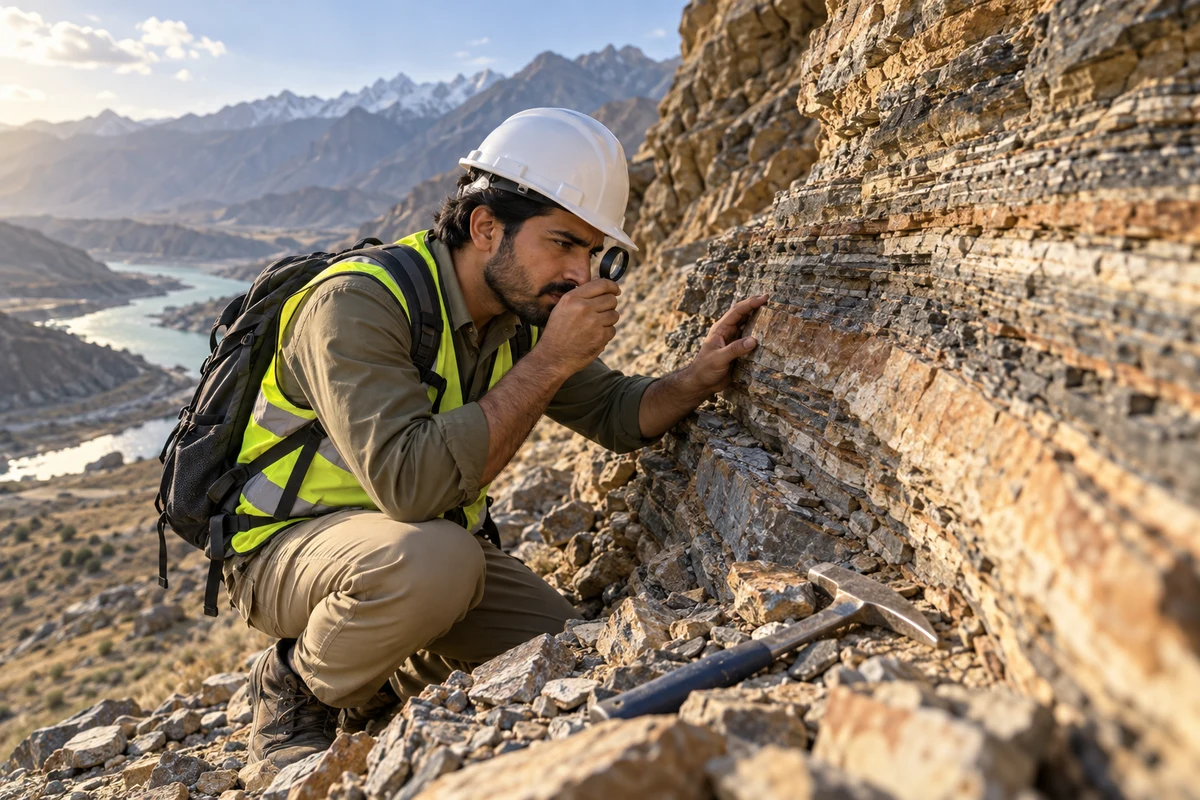
Geologists study rocks, minerals, landforms and the processes that shape Earth. Their work supports resource assessment, construction, water management and understanding natural hazards.
Key Outcomes
What this career leads to
Earth-process insight
Safer site decisions
Resource understanding
Hazard assessment
What They Do
On the job
Examine rocks, soils and geological structures
Conduct field surveys and create geological maps
Analyse samples and geospatial data
Prepare interpretations for engineering, environmental or resource decisions
Where They Work
Typical workplaces
Geological surveys
Engineering and construction firms
Mining and energy companies
Environmental consultancies
Water-resource organisations
Universities and research institutes
Core Skills
What it takes
Field observation
Geological mapping and GIS
Spatial and analytical reasoning
Technical reporting and safety awareness
Areas of Application
Where this knowledge shows up
Engineering geology
Hydrogeology
Mineral and energy geology
Environmental geology
Geohazards and earth history
Education & Entry Path
The learning route
A bachelor's degree in geology, earth science or geoscience is typical. Professional practice and specialist roles may require field experience, registration or postgraduate study.
Career Scope
The long view
Geologists may specialise in water, hazards, engineering sites, environmental assessment, minerals, energy, mapping, research or education.