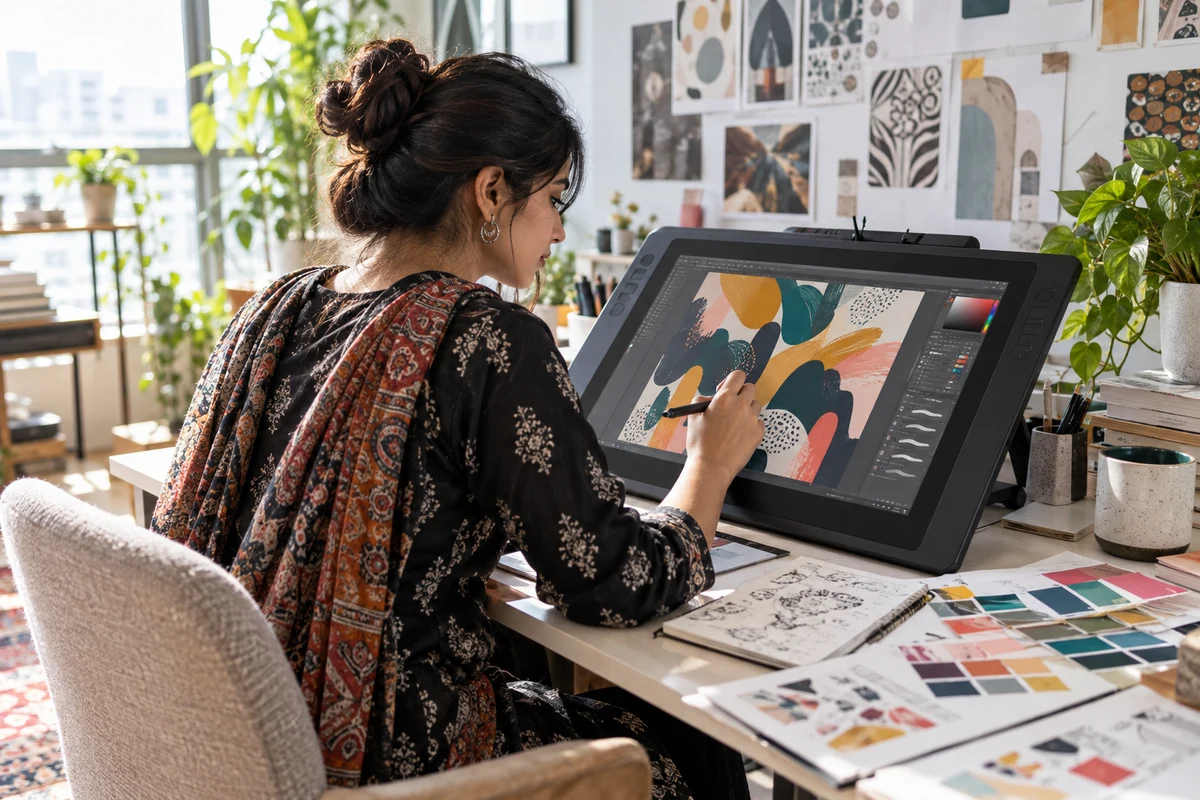
Graphic designers combine typography, images, colour and layout to communicate messages. Their work helps people understand brands, information, products and campaigns.
Key Outcomes
What this career leads to
Clear visual messages
Consistent identity
Engaging information
Useful design systems
What They Do
On the job
Understand the communication goal and audience
Develop visual concepts and layout options
Create and refine digital or print designs
Prepare final assets and maintain design consistency
Where They Work
Typical workplaces
Design studios
Marketing agencies
Media and publishing companies
Technology firms
In-house brand teams
Freelance practice
Core Skills
What it takes
Typography, colour and composition
Design software and production knowledge
Creative problem-solving
Feedback, presentation and attention to detail
Areas of Application
Where this knowledge shows up
Brand identity
Editorial and publication design
Digital and social-media design
Packaging and advertising
Information and interface graphics
Education & Entry Path
The learning route
A degree or diploma in graphic design, visual communication or a related field is useful, but a focused portfolio demonstrating sound design decisions is central to entry.
Career Scope
The long view
Designers may specialise in branding, editorial, digital, packaging, motion or information design and may progress into art direction or design leadership.