
SCIENCE & RESEARCH
Microbiologist
Studying the Invisible Life Around Us
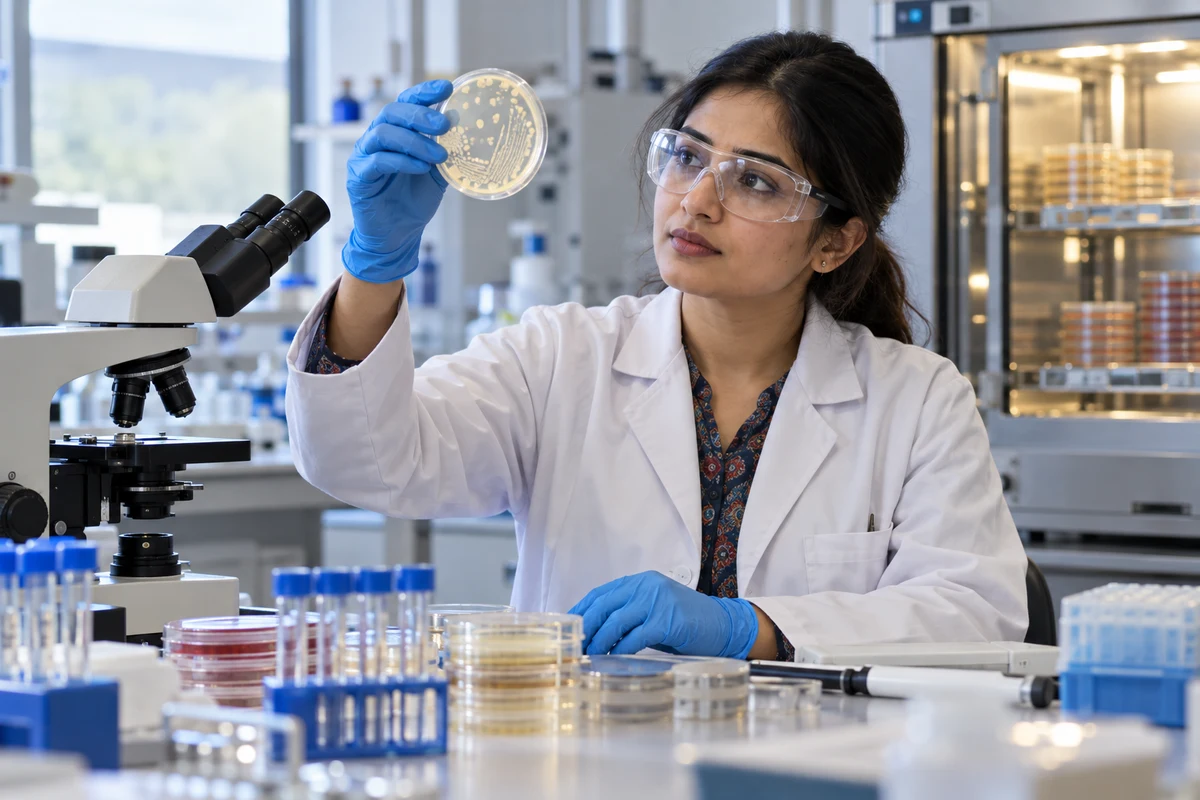
Microbiologists study bacteria, viruses, fungi, parasites and other microscopic organisms. Their work helps explain infection, food safety, environmental processes and useful biological production.
Key Outcomes
What this career leads to
- Disease understanding
- Safer food and water
- Better laboratory control
- Useful microbial products
What They Do
On the job
- Collect, culture and identify microorganisms
- Investigate microbial growth and behaviour
- Test the effects of treatments or environmental conditions
- Record, analyse and communicate laboratory findings
Where They Work
Typical workplaces
- Clinical and public-health laboratories
- Food and beverage companies
- Pharmaceutical and biotechnology firms
- Water and environmental agencies
- Universities and research centres
- Quality-control laboratories
Core Skills
What it takes
- Aseptic laboratory technique
- Microscopy and molecular methods
- Critical analysis
- Biosafety and accurate documentation
Areas of Application
Where this knowledge shows up
- Medical microbiology
- Food and dairy microbiology
- Environmental microbiology
- Industrial microbiology
- Public-health surveillance
Education & Entry Path
The learning route
A degree in microbiology, biological sciences or medical laboratory science is typical. Clinical, specialist and research positions may require registration or postgraduate training.
Career Scope
The long view
Microbiologists can contribute to diagnostics, infection control, quality assurance, environmental monitoring, food production, biotechnology, teaching and research.
Related Careers
Kindred paths to explore
Explore Scientists’ Contribution
The discoveries behind this field
- Alexander Fleming 1881 - 1955 Medicine Discovered penicillin, revolutionising medicine Read their profile
- Louis Pasteur 1822 - 1895 Medicine Germ theory of disease and pasteurisation Read their profile
- Charles Darwin 1809 - 1882 Biology Theory of Evolution by Natural Selection Read their profile
- Rosalind Franklin 1920 - 1958 Chemistry X-ray crystallography that revealed DNA structure Read their profile