
CREATIVE & DESIGN
Photographer
Capturing Moments, Evidence and Meaning
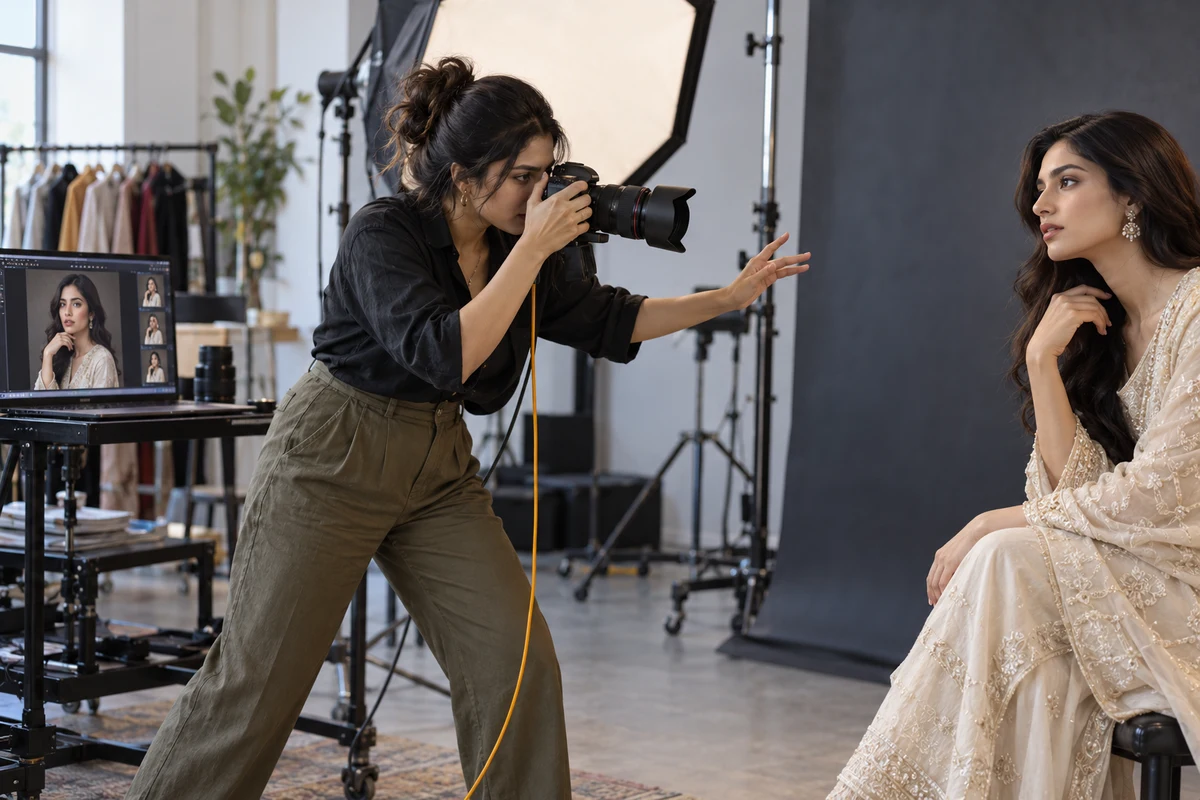
Photographers use light, timing, composition and technical control to create images for information, memory, art and communication. Professional practice also requires planning, editing and responsible representation.
Key Outcomes
What this career leads to
- Powerful visual records
- Clear storytelling
- Preserved moments
- Professional imagery
What They Do
On the job
- Plan shoots around purpose, subject and location
- Control camera settings, lighting and composition
- Direct or collaborate with subjects respectfully
- Select, edit, manage and deliver image files
Where They Work
Typical workplaces
- Media organisations
- Studios and production companies
- Advertising and brand teams
- Events and institutions
- Research or conservation projects
- Freelance practice
Core Skills
What it takes
- Lighting and camera technique
- Composition and visual storytelling
- Editing and colour management
- Communication, organisation and business practice
Areas of Application
Where this knowledge shows up
- Portrait and event photography
- Documentary and photojournalism
- Commercial and product photography
- Nature and scientific photography
- Architectural and interior photography
Education & Entry Path
The learning route
Formal study in photography, media or visual arts can help, but a coherent portfolio, technical command and real assignment experience are key. Some fields require safety or subject-specific training.
Career Scope
The long view
Photographers may specialise by subject, work independently or join media, commercial and institutional teams. Business, licensing and file-management skills strongly affect professional practice.
Related Careers
Kindred paths to explore
Explore Scientists’ Contribution
The discoveries behind this field
- Ibn al-Haytham c. 965 - 1040 Physics Pioneer of experimental optics and the scientific method Read their profile
- Al-Jazari c. 1136 - 1206 Technology Ingenious automata and mechanical devices Read their profile
- Archimedes c. 287 BCE - 212 BCE Mathematics Principles of buoyancy and early integral calculus Read their profile
- Galileo Galilei 1564 - 1642 Physics Father of modern observational astronomy and kinematics Read their profile