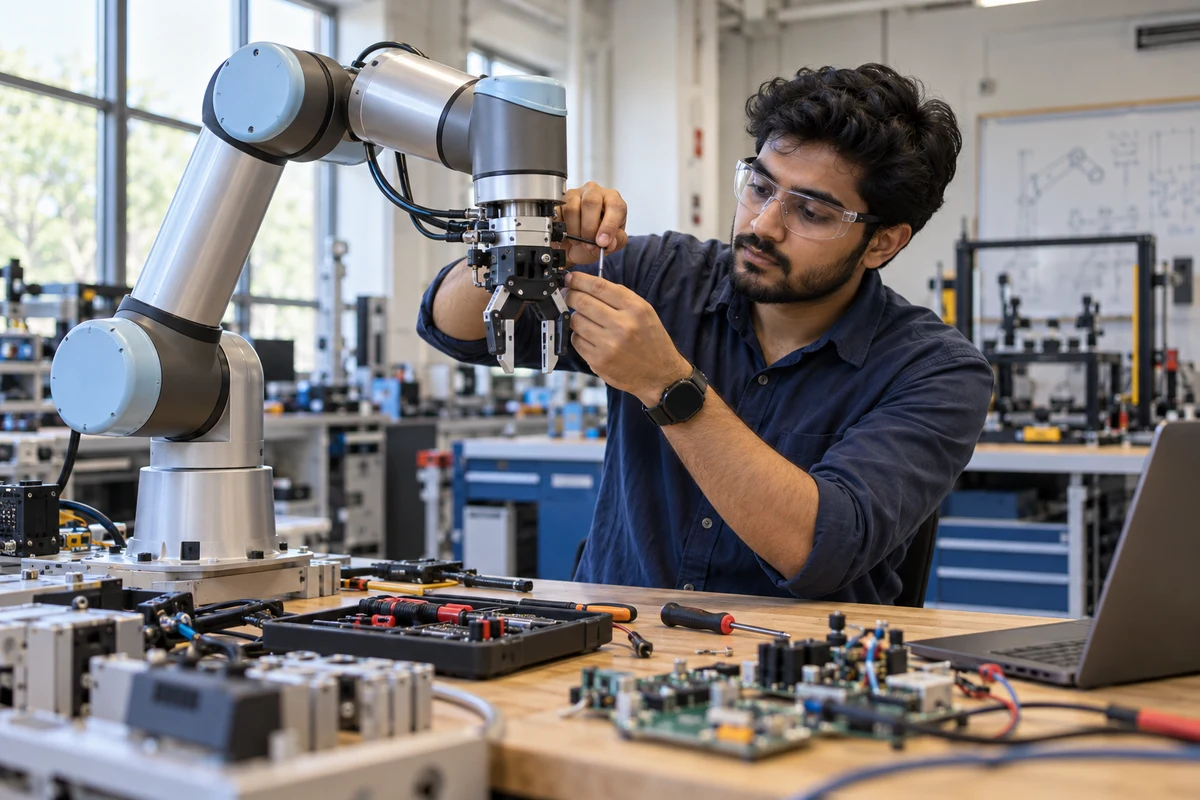
Connecting Machines, Software and Intelligent Control
Robotics engineers design machines that sense, decide and act in the physical world. Their work brings together mechanics, electronics, control systems and software.
Key Outcomes
What this career leads to
Smart automation
Precise machines
Safer operations
New technical capability
What They Do
On the job
Design robotic mechanisms and system architecture
Integrate sensors, motors and controllers
Develop control or perception software
Prototype, test and improve robot performance
Where They Work
Typical workplaces
Manufacturing companies
Automation firms
Research laboratories
Healthcare technology companies
Agricultural and logistics organisations
Universities and startups
Core Skills
What it takes
Mechanics and electronics
Programming and control theory
Systems integration
Prototyping, testing and teamwork
Areas of Application
Where this knowledge shows up
Industrial automation
Medical and assistive robotics
Autonomous vehicles and drones
Agricultural robotics
Research and education
Education & Entry Path
The learning route
A degree in robotics, mechatronics, mechanical engineering, electrical engineering or computer engineering is a common route. Projects and hands-on laboratory experience are particularly important.
Career Scope
The long view
Robotics engineers may specialise in mechanical design, embedded systems, control, perception, AI, testing or systems integration.