
Then
His measured Earth radius and astronomical tables improved maps and calendars across the region and were cited for centuries.
Timeline of Discovery · 6 / 30
c. 973 - 1048 · Islamic Golden Age (Khwarezm / Ghazni)
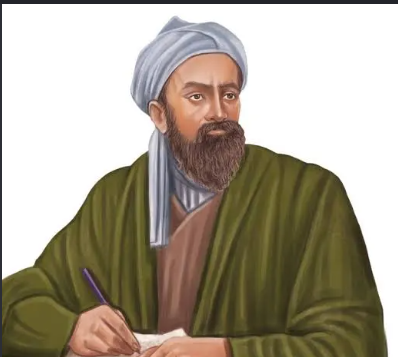
Al-Biruni was a scholar of staggering range — mathematics, astronomy, geography, physics and history — who measured the Earth and insisted on careful empirical corroboration.
How big is the Earth, and how can we understand other peoples and their sciences without prejudice?
What this scientist actually did — precisely and plainly.
He calculated the Earth’s radius with remarkable accuracy, wrote encyclopedic geographic studies, and described India’s science and culture with unusual fairness.
The tools, experiments and reasoning behind the discovery.
He combined precise instruments, trigonometry and repeated observations, and he cross-checked facts across multiple sources before accepting them.
From their own moment in history to the world we live in now.
His measured Earth radius and astronomical tables improved maps and calendars across the region and were cited for centuries.
Geodesy (measuring the Earth), cautious data verification and respectful cross-cultural scholarship all reflect his standards.
Landmarks that carried the idea into the world.
Where this profile was verified.
Last reviewed: 2026-09-22
Follow their field into the Career Atlas