
Then
His work raised ancient mathematics and mechanics to an exceptional level and supplied methods later studied by engineers, mathematicians and physicists.
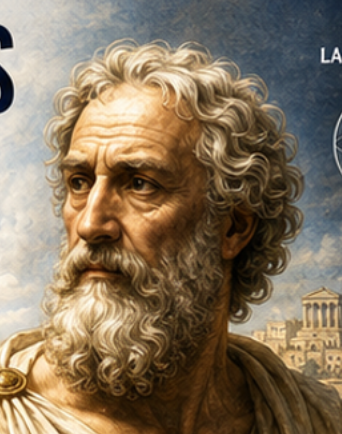
Timeline of Discovery · 1 / 30
c. 287 BCE - 212 BCE · Ancient Greece
Archimedes was a Greek mathematician and natural philosopher whose work connected abstract geometry with practical questions about balance, levers, floating bodies and machines.
How can mathematical reasoning explain balance, motion, volume and the behaviour of objects in water?
What this scientist actually did — precisely and plainly.
He developed foundational results in geometry and mechanics, explained the principle of buoyancy and analysed the lever mathematically. His writings showed that physical problems could be treated with rigorous quantitative reasoning.
The tools, experiments and reasoning behind the discovery.
Archimedes combined geometrical proof, idealised mechanical models and careful reasoning about centres of gravity and displaced fluid. Some famous stories about his experiments were written much later and should not replace the evidence in his surviving works.
From their own moment in history to the world we live in now.
His work raised ancient mathematics and mechanics to an exceptional level and supplied methods later studied by engineers, mathematicians and physicists.
Buoyancy calculations, mechanical advantage, hydrostatics and mathematical modelling remain central to ships, structures, machines and science education.
Landmarks that carried the idea into the world.
Give me a place to stand on, and a lever long enough, and I will move the world.
Where this profile was verified.
Last reviewed: 2026-09-22
Follow their field into the Career Atlas