
Then
Published in 1866, his work was largely ignored until 1900, when scientists rediscovered it while examining heredity afresh.
Timeline of Discovery · 18 / 30
1822 - 1884 · Austro-Hungarian Empire (Czech lands)
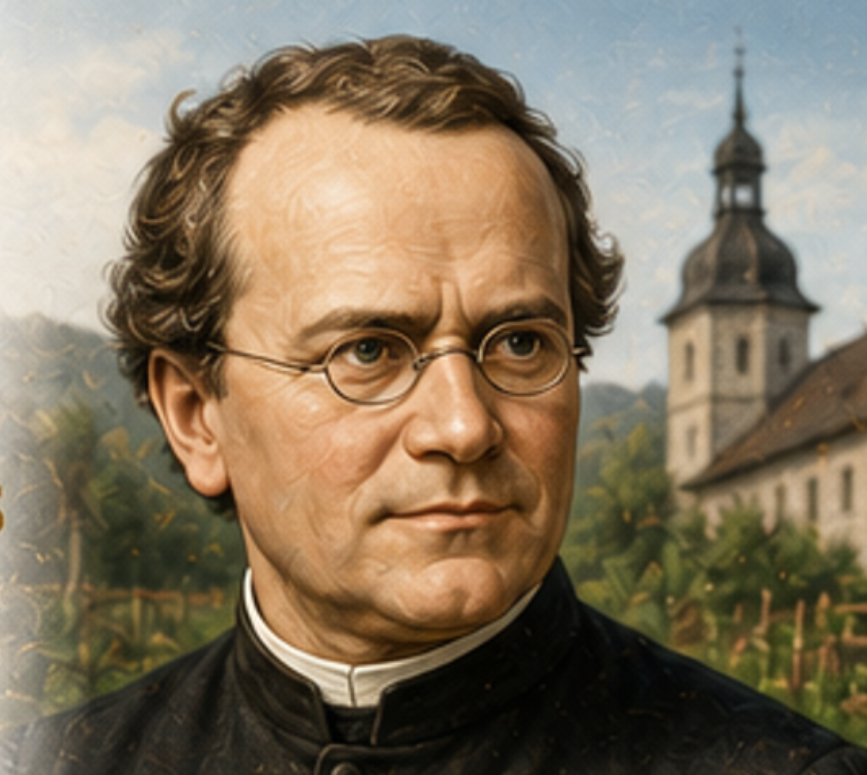
Gregor Mendel, an Augustinian monk, discovered the basic laws of inheritance by patiently counting pea plants — laying the foundation of genetics.
Do traits blend away, or are they passed in discrete, predictable units?
What this scientist actually did — precisely and plainly.
He showed that traits such as seed colour follow clear patterns of dominance and segregation in a 3:1 ratio, revealing “factors” we now call genes.
The tools, experiments and reasoning behind the discovery.
He controlled breeding, chose traits that varied cleanly, counted thousands of offspring in large samples and used simple mathematics to find the pattern.
From their own moment in history to the world we live in now.
Published in 1866, his work was largely ignored until 1900, when scientists rediscovered it while examining heredity afresh.
Mendelian genetics underlies inheritance counselling, plant and animal breeding, and how every genetics classroom introduces DNA.
Landmarks that carried the idea into the world.
Where this profile was verified.
Last reviewed: 2026-09-22
Follow their field into the Career Atlas