
Then
Maragha became a model of institutional astronomy and his tables guided calendars and navigation for the region.
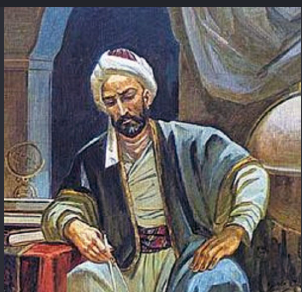
Timeline of Discovery · 9 / 30
c. 1201 - 1274 · Islamic Golden Age (Persia / Mongol Ilkhanate)
Nasir al-Din al-Tusi was a polymath astronomer and mathematician who built a leading observatory and refined planetary models later echoed in Europe.
How can the observed motions of planets be reproduced with mathematics, without the awkward errors of Ptolemy’s models?
What this scientist actually did — precisely and plainly.
At the Maragha observatory he compiled star tables and devised geometric devices (such as the Tusi couple) that smoothed planetary motion into more accurate circular combinations.
The tools, experiments and reasoning behind the discovery.
He organised high-precision observations, tables and competing scholars at one observatory, then translated observations into refined geometric models.
From their own moment in history to the world we live in now.
Maragha became a model of institutional astronomy and his tables guided calendars and navigation for the region.
His geometric “couple” inspired later Copernican models, and his observatory culture previews modern research institutes and shared data.
Landmarks that carried the idea into the world.
Where this profile was verified.
Last reviewed: 2026-09-22
Follow their field into the Career Atlas